If you have been told you need a root canal, it is normal to feel unsure. Understanding the steps of the root canal procedure can help you feel calm and prepared. A root canal is a common dental treatment used to save a damaged or infected tooth. With modern care, the process is safe, effective, and more comfortable than many people expect.
Why A Root Canal Is Needed
A root canal is done when the inside of your tooth, called the pulp, becomes infected or inflamed. This can happen due to:
- Deep cavities
- Cracked or chipped teeth
- Repeated dental work on the same tooth
- Injury to the tooth
Without treatment, the infection can spread and cause pain, swelling, or even tooth loss.
Root Canal Procedure Steps Explained
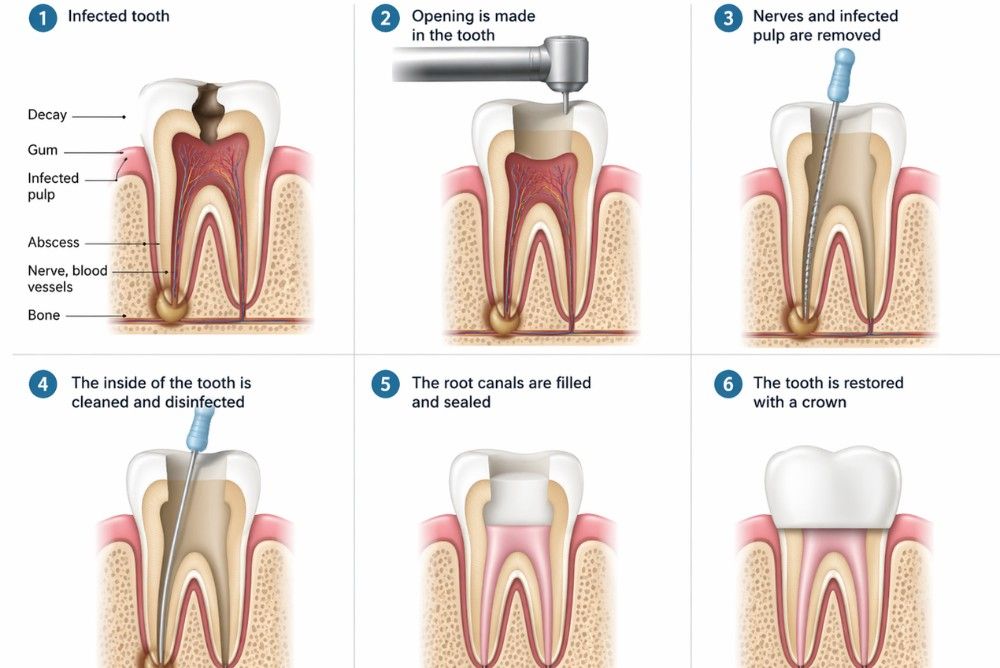
Knowing what happens during the procedure can ease your worries. Here is a simple breakdown:
- Examination and X-rays – Your dentist checks the tooth and takes X-rays to see the infection.
-
- Numbing the area – Local anaesthesia is used so you do not feel pain during the procedure.
- Cleaning the tooth – A small opening is made to remove the infected pulp.
- Shaping and disinfecting – The inner canals are carefully cleaned and shaped.
- Filling the canals – The space is filled with a special material to prevent reinfection.
- Sealing the tooth – The tooth is sealed, and in many cases, a crown is placed to strengthen it.
What Does It Feel Like?
Many people worry about pain, but modern techniques make the procedure comfortable. During the treatment, you may feel slight pressure, but not pain.
When discussing root canal pain and recovery, it is important to know that most discomfort happens after the procedure, not during it. Mild soreness is normal and usually goes away in a few days.
Root Canal Pain And Recovery Timeline
Here is a simple chart to help you understand what to expect after your treatment:
Day 1–2
- Mild soreness or sensitivity
- Manageable with prescribed or over-the-counter medication
Day 3–5
- Discomfort reduces significantly
- You can return to normal eating habits
After 1 week
- The tooth feels normal
- Follow-up visit if needed
If the pain lasts longer or worsens, contact your dentist.
Tips For A Smooth Recovery
To heal faster and stay comfortable, follow these tips:
- Avoid chewing on the treated side for a few days
- Maintain good oral hygiene
- Take medications as directed
- Avoid very hot or cold foods initially
- Attend follow-up appointments
When To Consider Root Canal Therapy
If you have ongoing tooth pain or sensitivity, consider root canal therapy in Stittsville. Early treatment helps save your natural tooth and prevents bigger dental problems.
Visiting a trusted dental clinic in Stittsville ensures that your care is handled with the right tools and expertise.
Choosing The Right Dental Care Provider
When selecting a dental clinic near you, look for:
- Experienced dental professionals
- Modern equipment and technology
- Clear communication about procedures
- A comfortable and welcoming environment
These factors can make your treatment experience much easier and stress-free.
Benefits Of A Root Canal
A root canal is not just about removing pain. It offers long-term benefits such as:
- Saving your natural tooth
- Preventing the spread of infection
- Restoring normal chewing ability
- Improving overall oral health
Conclusion
A root canal may sound intimidating, but it is a straightforward and effective way to protect your smile. With the right care and guidance, you can go through the process comfortably and recover quickly.
At Asnan Dental Hazeldean, we are committed to making every visit smooth and stress-free. If you are experiencing tooth pain or think you may need treatment, do not wait. Book your appointment today and let our expert hands restore your dental health with confidence.
FAQs
Does a root canal hurt?
Most patients feel minimal or no pain. A local anaesthetic will keep you numb, so any pain after treatment is usually mild and temporary.
How much time does a root canal take?
A root canal typically takes 60 to 90 minutes. The number of visits may vary based on the condition of the tooth and the severity of the infection.
Am I allowed to eat after a root canal?
Certainly, but let the numbness fade. In the initial stages, stick to soft items. As for the treated side, do not chew on it until your tooth is fully restored.
What is the recovery time?
Most clients recover quickly. Most individuals feel normal after some days. Mild soreness may be short-lived but can improve with treatment and medication.
Is a crown always necessary following a root canal?
It is often advised to get a crown to protect the tooth. It helps regain strength and averts future damage, particularly in the back teeth.
What will happen to me if I put off my root canal?
If you delay specialised root canal treatment, the infection can worsen. In addition, you may develop severe pain and might lose your tooth. Quick treatment will help to save your tooth and avoid complex procedures.